If you've bet seriously for more than a year or two, you've probably encountered the same pattern: a good run, a polite email from the bookmaker, and suddenly your maximum stake has been cut from €500 to €20. It happens because traditional bookmakers are not comfortable taking money from profitable customers. Their model depends on recreational bettors losing over time. Consistent winners disrupt that model, so they get restricted. It's not personal, whatever the email says.
Betting brokers exist as the professional-grade alternative. They are licensed intermediaries that give bettors access to sharp bookmakers and exchanges, without the individual account exposure that triggers restrictions. Understanding how they work changes what's possible for a serious bettor, and honestly, most people who've been limited a few times wish they'd found this route sooner.
The Core Broker Model: What a Betting Broker Actually Does
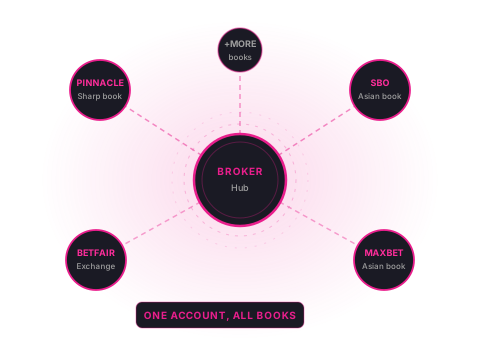
A betting broker holds corporate institutional accounts at bookmakers and betting exchanges. When you place a bet through a broker, you are not betting directly with the bookmaker: you are instructing the broker to place that bet on your behalf through their account.
The bookmaker sees a bet from the broker's institutional account. They do not see your name, your betting history, or your profitability. The individual profiling mechanism that triggers restrictions (tracking stake patterns, win rates, and market timing) cannot operate when bets arrive through a large institutional account rather than an individual customer account.
This is not a loophole or a workaround, worth saying plainly since people sometimes assume it must be. It is the same relationship that professional syndicates and larger betting operations have always used. Brokers just make this infrastructure available to individual bettors, at a commission rate that, for anyone accessing sharper prices, is typically well worth the cost.
How a Broker Bet Works: Step by Step
- You open a broker account. Submit an application, pass KYC (identity and address verification), and fund the account via bank transfer.
- You instruct a bet. Via the broker's platform (typically a web interface or in some cases by phone) you specify the bookmaker, market, selection, odds, and stake.
- The broker executes. SportMarket, AsianConnect, or whichever broker you use places the bet through their institutional account at the relevant bookmaker. Execution is typically fast, seconds to a few minutes depending on the broker and market.
- The bet settles. The bookmaker settles the bet against the broker's institutional account. The broker credits your winnings (or debits your loss) to your broker account.
- Commission is applied. The broker deducts their commission (typically a percentage of stakes) at settlement. You see a net balance in your broker account.
- You withdraw when ready. Bank transfer back to your account. The broker holds your funds until you request a withdrawal.
Commission: The Real Cost and How to Think About It
The commission a broker charges is the most visible cost of using the model, but it is not the total picture. The more relevant comparison is between the full cost of betting through a broker (broker commission + sharp bookmaker margin) versus the full cost of betting directly at a soft bookmaker (the margin embedded in the odds).
A soft bookmaker operates at a 6–10% overround on most markets. That means for every €100 in stakes, the expected return to the bettor is €90–94 before any skill is applied. A betting broker charging 1% commission to access Pinnacle (which operates at a 1–2% overround) produces a total effective margin of around 2–3%. For bettors who have an edge, or who simply want access to the tightest odds available, the broker model is materially cheaper than betting at soft prices.
Commission structures vary: some brokers charge a percentage of stakes (e.g. 0.5–1%), others charge a percentage of winnings. Understanding the basis matters: a stake-based commission applies whether you win or lose, which is generally more predictable. Verify the exact structure with your chosen broker at registration.
Which Bookmakers Can You Access Through a Broker?
The exact book list varies by broker, but most established brokers provide access to the sharp and Asian books that professional bettors need most:
| Bookmaker / Market | Type | Why It Matters |
|---|---|---|
| Pinnacle | Sharp bookmaker | No-limit policy, lowest margins, restricted from Ireland directly |
| SBOBet | Asian bookmaker | Asian handicap focus, high limits, sharp pre-event pricing |
| ISN / BetISN | Asian bookmaker | Part of the Asian market ecosystem accessed via most brokers |
| Betfair Exchange | Peer-to-peer exchange | Available via some brokers: back/lay and in-play trading |
The broker you choose determines which books you can access. If access to a specific bookmaker is critical for your approach, confirm it is included before opening the account. See our guide to accessing Pinnacle for more on that specific market.
Why Professional Bettors Use Brokers, the Real Reasons
The surface reason is account restrictions, and brokers solve that problem directly. But the deeper reasons go beyond avoiding limitations. Start with access: Pinnacle does not accept registrations from Ireland, and SBOBet and other Asian books are difficult or impossible to reach directly from most European jurisdictions, so a broker hands you that whole ecosystem through a single account. Then there's price, which is arguably the bigger deal even though people focus less on it. Sharp bookmakers consistently offer tighter margins than soft books, and accessing Pinnacle or SBOBet prices, even after broker commission, almost always produces better long-term returns than betting at Paddy Power or Betfair Sportsbook margins, at least for bettors who actually have an edge to protect. There's also a simpler, less glamorous reason: managing one funded broker account beats juggling five separate bookmaker accounts across different currencies, jurisdictions, and funding methods. And finally, longevity. A broker account doesn't close because you're profitable, which for anyone playing the long game is the whole point, a stable piece of infrastructure rather than a constantly degrading set of accounts you have to keep replacing.
Is a Betting Broker Right for You?
Brokers are designed for bettors who bet at volume, have an edge, or need access to markets unavailable through conventional routes. If you place £10 each-way on the Grand National once a year, skip this. A broker account is not the right tool for you, the commission structure and minimum deposit requirements are built around serious betting activity, not a flutter.
But if you are consistently finding that your accounts are being limited, that you need access to Pinnacle or Asian markets from Ireland, or that you are betting at a level where the difference between a 7% margin and a 1.5% margin is actually material to your bottom line, a broker is the logical next step. I'd push back a little on the idea that this is a big, dramatic decision: most professional bettors who go through the process describe it as one of the more significant changes they made to their operation, sure, but it's also just paperwork and a bank transfer at the end of the day.
For a full comparison of the leading options, see our ranked guide to the best betting brokers in 2026. For a head-to-head between the broker model and betting direct, see Betting Broker vs Bookmaker.
Frequently Asked Questions : How Betting Brokers Work
What is a betting broker and how is it different from a bookmaker?
A betting broker (also called a betting agent) is a licensed intermediary that places bets on your behalf through their own institutional accounts at bookmakers and exchanges. Unlike a bookmaker, the broker does not set odds or hold risk against you: they act as an agent, executing your instructions at the prices available on the underlying markets. The key practical difference: bookmakers restrict winning accounts; brokers do not, because your individual record is not visible to the underlying operator.
How do betting brokers make money?
Betting brokers charge commission on bets placed through their platform, typically a percentage of stakes, ranging from around 0.5% to 2% depending on the broker, market, and volume. Some brokers structure commission as a percentage of winnings instead. Unlike bookmakers, the broker earns the same commission whether you win or lose: there is no conflict of interest, and no incentive to restrict profitable bettors.
Which bookmakers can I access through a betting broker?
The available bookmakers depend on the specific broker. Most major brokers (AsianConnect, BetInAsia, MadMarket, SportMarket) provide access to Pinnacle, SBOBet, and a range of Asian and sharp bookmakers. Some brokers also provide access to betting exchanges. The exact book list should be confirmed with each broker directly, as it can evolve over time.
Can I use a betting broker if I'm based in Ireland?
Yes. Betting brokers are the standard solution for Irish bettors wanting access to Pinnacle (which does not accept direct Irish registrations) and to Asian sharp markets. The broker framework is legal in Ireland: you are opening an account with a licensed intermediary, depositing funds, and instructing bets. The broker handles the rest.
Is using a betting broker safe?
The established brokers (AsianConnect, BetInAsia, MadMarket, SportMarket) are licensed operators that have been serving professional bettors for years. The key due diligence steps: verify the broker is actually licensed, confirm how client funds are held (segregated accounts are preferable), and start with a modest deposit while you familiarise yourself with the platform and withdrawal process.