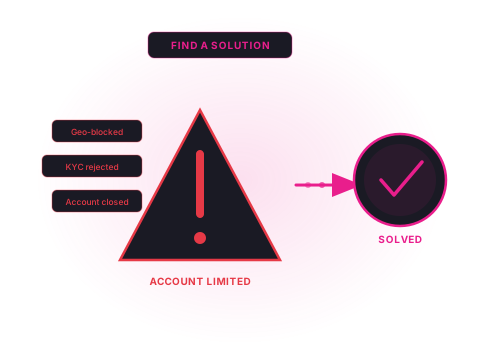
If a bookmaker has refused to pay your winnings, the first thing worth understanding is that not all refusals are the same. Some are legitimate holds pending regulatory compliance. Some are administrative errors, plain and simple. And some, frankly, are attempts to avoid paying a bet that was correctly placed and correctly won. Each of these needs a different response, and lumping them together just wastes time.
Figuring out which category you're in, and knowing your rights within it, is the starting point. In regulated markets you actually have significant recourse here, the framework genuinely is on your side, it just requires following the right escalation path rather than treating the initial refusal as the final word.
Legitimate Reasons a Bookmaker Can Withhold Payment
KYC verification incomplete
Most bookmakers require identity and address verification before processing withdrawals above a threshold. If your account has not completed KYC, a payout hold is a standard and legal requirement. The resolution is straightforward: complete the verification. This is typically the most common cause of payment holds.
Source of funds check
For larger withdrawals, particularly from accounts with high deposit/withdrawal volumes, bookmakers may request evidence of the source of funds: payslips, bank statements, or tax returns. This is an AML obligation, not an optional request. Providing the documents promptly resolves it.
Terms of service investigation
If the bookmaker believes a specific breach of their terms has occurred (a duplicate account, use of a VPN, bonus abuse, or irregular activity) they may withhold payment pending investigation. The key legal point: the breach must be specific. Generic claims are legally insufficient and disputable.
Bet under dispute
Occasionally the outcome of a bet itself is disputed: a race result overturned, a data error in the bet placement, or an obvious pricing error. Legitimate disputes should be resolved within defined timelines under the bookmaker's terms, with ADR available if unresolved.
Reasons That Do Not Justify a Payout Refusal
Profitable account
A bookmaker cannot legally refuse to pay because your account has been profitable. Winning from gambling is legal. Account restrictions (stake limits) are within a bookmaker's commercial discretion; refusing to pay correctly placed winning bets is not.
Sharp betting patterns
Betting on early prices, taking value systematically, or using informed judgement is not a breach of any legitimate betting terms of service. If a bookmaker cites "professional betting" or "advantage play" as the basis for a refusal, this is a legal grey area at best and challengeable via ADR.
System errors or promotions
If a bookmaker claims a bet was placed at an erroneous price due to a system error, they are typically obligated to settle at the original displayed odds unless the error was obvious (e.g., 1000/1 on a heavy favourite). Terms should specify what constitutes a priceable error.
Unexplained account closure
If an account is closed and funds withheld without explanation, this is not acceptable under most regulatory frameworks. The bookmaker must provide a reason for the closure and a timeline for returning funds, regardless of the reason for closing the account.
Your Legal Position When a Payout Is Refused
Licensed bookmakers operate under gambling licences that carry specific obligations to customers. In Ireland, the UK, Malta, and Gibraltar (the primary licencing jurisdictions for online bookmakers) the following protections apply:
- Segregated funds: Customer funds must be held separately from operational funds. Your balance is not at risk from the bookmaker's financial position.
- Complaints procedure: All licensed bookmakers must operate a formal complaints procedure with defined response timelines.
- ADR access: After completing the internal complaints process, you have the right to take disputes to an approved Alternative Dispute Resolution provider. ADR decisions are binding on the bookmaker.
- Regulatory escalation: If the bookmaker is not meeting its obligations under its licence, you can report to the issuing regulator. Regulators have enforcement powers including licence suspension.
- Specific breach required: Under consumer protection law, a bookmaker withholding funds must be able to cite a specific, itemised breach, not a generic claim. You are entitled to request this specificity in writing.
Escalation Steps That Work
-
Get everything in writing immediately
Email the bookmaker's compliance or payments team. Do not rely on live chat. Request the specific reason for the refusal in writing, citing your account details and the date/amount of the disputed payment.
-
Check for outstanding KYC tasks
Log into your account and check for any outstanding document requests or verification steps. Complete these first; if this is the cause, resolution is straightforward and quick.
-
Request specific itemisation
If the refusal cites a terms of service breach, request in writing the specific clause, the specific action that breached it, and the evidence the bookmaker holds. Generic claims are legally insufficient.
-
Submit a formal written complaint
Use the bookmaker's formal complaints procedure. This is a legal requirement of their licence. Keep a dated record of submission and any responses received.
-
Escalate to ADR after 8 weeks
If the complaint is unresolved after 8 weeks (or the final response is unsatisfactory), submit to the relevant Alternative Dispute Resolution scheme. In Ireland, this may be the Betting Arbitration Scheme or an equivalent. ADR is free to the customer and binding on the bookmaker.
-
Report to the regulator
Report the situation to the bookmaker's licencing authority. For UK-licensed bookmakers, this is the UK Gambling Commission. For Malta-licensed, the Malta Gaming Authority. For Curaçao-licensed bookmakers, the Antillephone N.V. or equivalent. Regulatory complaints are a matter of record and affect the bookmaker's licence standing.
-
Consider small claims court (for smaller amounts)
For disputes under €2,000–€10,000 (depending on jurisdiction), small claims procedures provide a lower-cost legal route. This is a last resort and typically only after ADR has been exhausted.
What not to do
Do not close your account while a dispute is active. Do not accept a settlement under pressure without reviewing it. Do not allow the bookmaker to extend a compliance review indefinitely without asking for a specific timeline and the documents required to conclude it.
How Betting Brokers Reduce Payout Risk
The structural difference between soft bookmakers and betting brokers is relevant to payout risk. Soft bookmakers profit from bettors losing, which creates commercial incentive to find reasons to withhold payment from winning accounts. Betting brokers earn commission on net winnings, which means a winning bettor is the broker's most commercially valuable customer.
This commercial alignment means payout refusal simply isn't in a broker's interest. Brokers such as AsianConnect and BetInAsia have strong reputational incentives to pay quickly and transparently, since their whole business depends on professional bettors, often people who've already been burned once by soft bookmakers, choosing to trust them instead. KYC is completed once at the broker level, and withdrawals go back to the same funding source without extra rounds of verification.
Does that mean broker disputes never happen? No. But the incentives line up far better with the bettor's interests than they do under the soft bookmaker model.
Frequently Asked Questions
- Can a bookmaker legally refuse to pay out winnings?
- In regulated markets (Ireland, UK, Malta, etc.), bookmakers can withhold payment under specific circumstances: incomplete KYC verification, a genuine breach of terms of service (such as a duplicate account), an active anti-money-laundering investigation, or a payout under dispute where the bet outcome itself is under review. They cannot refuse to pay simply because you won, because your account has been profitable, or because they suspect you of sharp betting. If a regulated bookmaker refuses payment without a specific legal basis and without engaging the formal complaints process, the appropriate escalation route is the relevant regulatory authority.
- What should I do immediately when a bookmaker refuses to pay?
- First, request the specific reason for the refusal in writing via email, not via live chat. Get everything in writing. Second, check your account for any outstanding KYC tasks or outstanding document requirements; this is the most common cause of withheld payments and is often resolvable quickly. Third, review the terms of service cited in any refusal, as generic claims like "breach of terms" require specific itemisation under consumer protection law. Fourth, do not close or abandon the account; keep the account active and documented while the dispute is ongoing.
- How long can a bookmaker hold your winnings?
- Regulated bookmakers are required to process withdrawal requests within reasonable timeframes. Under most regulatory frameworks, standard withdrawals should be processed within 3–5 business days. Extended holds for KYC or source of funds checks may extend this, but should be accompanied by specific document requests. Indefinite holds without communication are not permissible under most licences. If a withdrawal has been pending without communication for more than 14 days, you have grounds to escalate to the regulator.
- Are my winnings safe if the bookmaker refuses to pay?
- In regulated markets, yes. Your funds are safe in the sense that they have not disappeared. Licensed bookmakers are required to hold customer funds in segregated accounts, separate from their operational funds. This means a bookmaker going insolvent does not mean your balance is lost. However, the refusal to pay is a separate matter from fund security: a bookmaker may have your funds in segregated accounts and still be withholding them pending investigation. The money exists; the dispute is about their obligation to pay it to you.
- What is the escalation route if a bookmaker refuses to pay?
- The escalation sequence is: (1) email the bookmaker's compliance or payments team directly with a formal written complaint; (2) request escalation to the complaints manager; (3) if unresolved within 8 weeks (UK) or an equivalent regulatory period, submit to the relevant Alternative Dispute Resolution (ADR) scheme; in Ireland this is the Betting Arbitration Scheme or equivalent; (4) report to the licensing authority (AGCC, MGA, Gambling Commission, or Irish Revenue Commissioners depending on the licence). Document every communication. ADR decisions are binding on licensed bookmakers.
- Does using a betting broker avoid payout problems?
- Betting brokers operate on a commission model; they earn a percentage of net winning bets. This creates a commercial incentive that is structurally aligned with paying winning bettors: the broker's revenue depends on bettors continuing to win and bet. Soft bookmakers profit from bettors losing, which creates the opposite incentive. Additionally, brokers typically have a single consolidated KYC process and hold client funds in client money accounts. Payout issues at the broker level are structurally rarer than at soft bookmakers, and when they occur they are generally administrative rather than commercially motivated.